
Hingeway Streets
Elevated Tramway
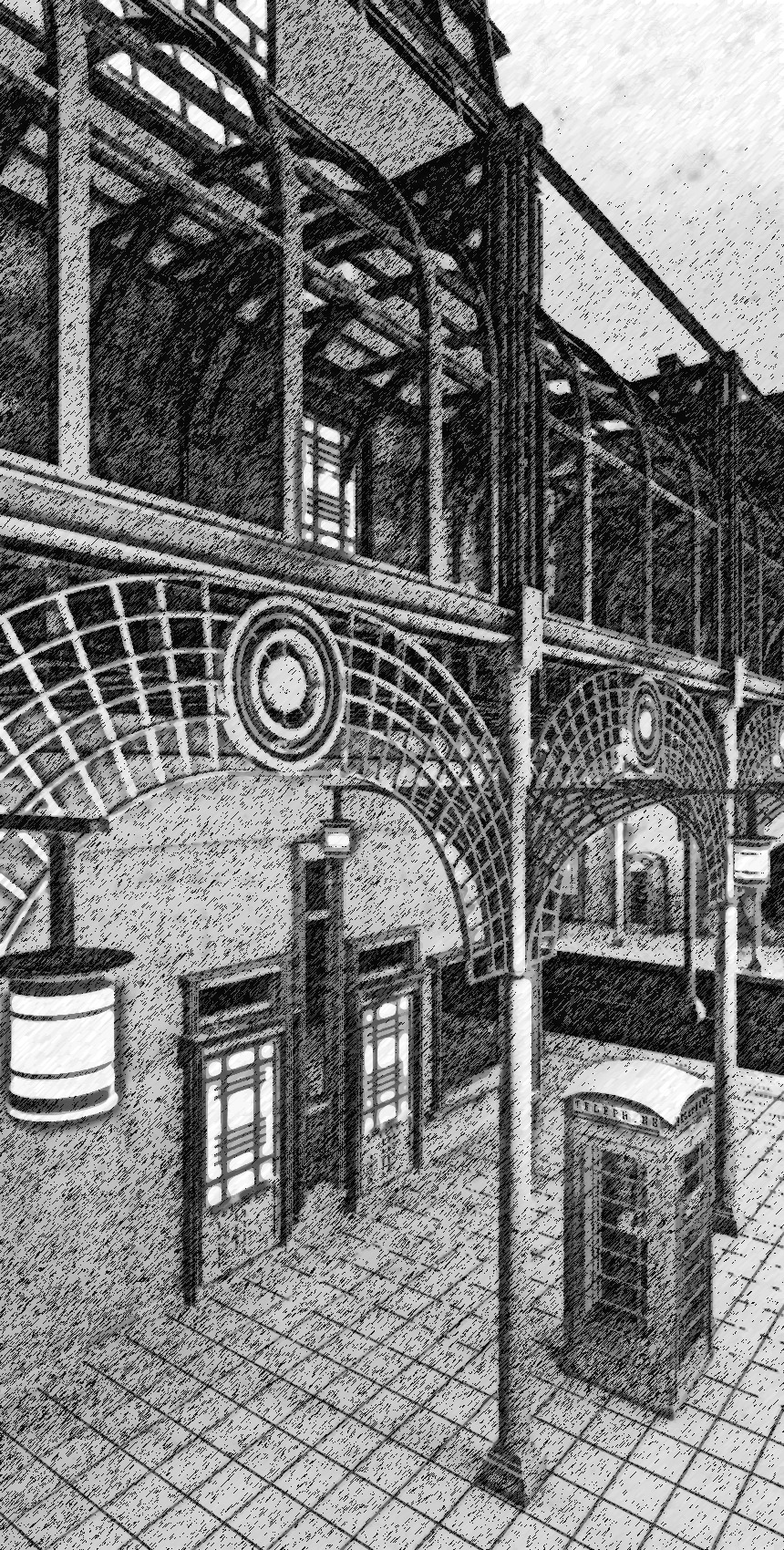
The elevated tramway is modelled in a modular fashion, allowing lengths to be assemble like a model railway set, each length of track is formed from a combination of upright supports, a track section, two track canopies, an over track support arch, and top stays.
The Elevated Tramway
Constructed as an answer to the problems mass transit within Hingeway, this elevated tram service superseded the canal network as the primary means of public transport during the latter third of the 19th century.
Originally designed with small steam powered trams in mind, the track was originally open to the elements. Later into its life a number of trams which used Sterling Engines where introduced, which proved popular due to the reduced noise of the “steam-less engine”. The greatest change came during the 1920s and 1930s when the Tramway was overhauled to use the new electric pantograph which allowed the new quieter trams to run at all times of the day without complaint. Once the change to electric trams was completed, the glass cover was built over the Tramway to reduce the noise for both passengers and pedestrians.
Transport in Hingeway
Sprawling out from the university wall is the old quarter of Hingeway, are a collection of dormitory buildings connected at the second story to the elevated tram network. In between the dorms are a number of smaller, narrower streets which house all the shops and other amenities which make for a prosperous settlement.
The area of Hingeway which was in development during the height of the Industrial Revolution is also serviced by a network of canals, which run in interconnected concentric circles radiating through the Borough. The flow of water in the canals runs from the central ring and 'up hill' to the outer ring. The exact opposite to what would be expected of it. The canal is little used today however as the Tramway supplanted it within a few years of the canal's construction as the default mode of transit in the Borough.